
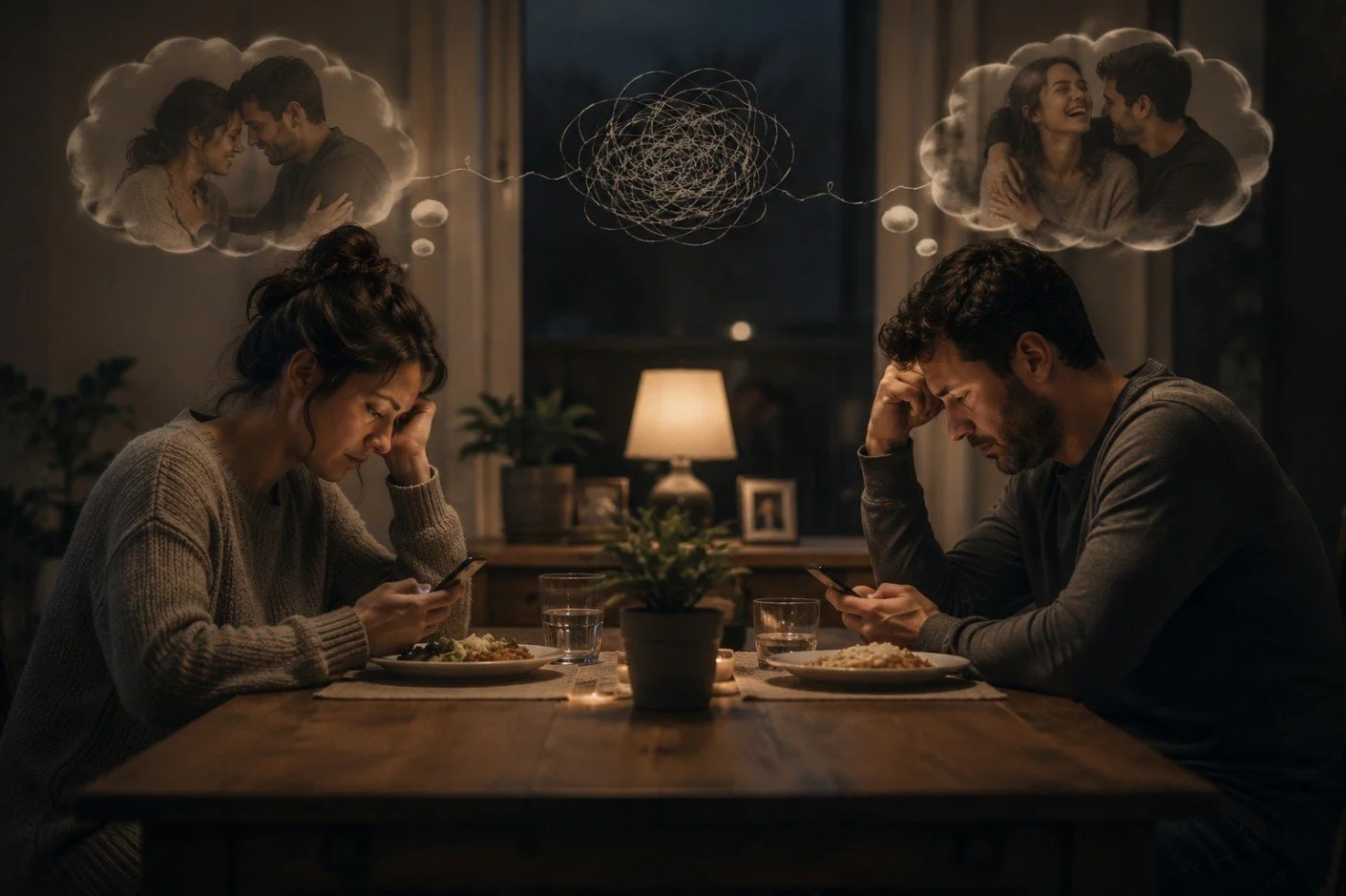
Why Couples Get Stuck: 3 Relationship Patterns
You are not fighting about what you think you’re fighting about.
Does your relationship feel completely different from what it used to be? Maybe you cannot stop fighting, maybe you feel distant from each other, or maybe one of you keeps trying while the other pulls away. Either way, your relationship no longer feels close, easy, or happy.
You may argue about money, parenting, intimacy, chores, or in-laws, but deep down, you probably already know those topics are not the real issue.
Most couples are not actually fighting about the surface problem. Underneath the arguments are painful feelings of rejection, loneliness, disconnection, criticism, and hurt.
Over time, couples can become stuck in relationship patterns that repeat over and over again. The good news is that these patterns can change.
There are three relationship patterns I commonly see couples get stuck in: the emotionally withdrawn couple, the high-conflict couple, and the pursuer-withdrawer couple.
The Withdrawn or Disconnected Couple
You may not be fighting much at all, but you feel disconnected from each other. You still eat together and maybe even watch TV together, but while you are in the same physical space, you feel worlds apart emotionally. You still talk about logistics, but not much beyond that. Over time, you start feeling more like roommates than partners.
It did not happen overnight. You or your partner — or both of you — miss how the relationship used to feel and want to feel close again, but somewhere along the way, talking about the relationship started feeling too painful, exhausting, or hopeless. Maybe those conversations ended in hurt feelings, conflict, disappointment, or silence, so eventually one or both of you stopped trying.
Even though you feel alone in the relationship, part of you still quietly wishes you could find your way back to each other.
The High-Conflict Couple
You fight often and both of you feel unheard. Arguments go from 0 to 100 in no time, and when you fight, you are no longer trying to understand each other. You are interrupting each other, blaming each other, talking over each other, and focusing on defending yourself. The conflict may linger for days, and sometimes the smallest thing can reignite it all over again.
Underneath all the anger, both of you feel hurt and misunderstood. You constantly feel attacked and criticized, so you stay focused on protecting yourself. You may even prepare your arguments ahead of time or collect evidence “just to be ready.”
Over time, the relationship starts revolving around conflict instead of connection. By this point, many couples feel emotionally exhausted and hopeless, but underneath it all, both partners still want to feel close, understood, and connected to each other.
The Pursuer–Withdrawer Couple
One of you keeps trying to reconnect, while the other keeps pulling away. You may want to talk after a fight, feel close again, or look for emotional or physical connection, while your partner shuts down, avoids the conversation, or gives you the cold shoulder. The more you try, the more your partner pulls away.
After a while, even trying to fix things starts turning into another painful cycle. One person feels rejected, abandoned, and alone, while the other feels overwhelmed, criticized, or like they can never get it right. You both want connection, but instead you end up feeling misunderstood, frustrated, and emotionally disconnected from each other.
Sometimes these roles can even switch depending on the situation, but both people usually end up feeling hurt and alone in the relationship.
Many Couples Move Between These Patterns
Most couples do not stay stuck in just one pattern. You may go from constant fighting to silence and distance, to one person trying to reconnect while the other pulls away. These patterns can shift depending on the situation, and stress, parenting, betrayal, burnout, or major life changes can intensify them even more.
I Will Not Be Your Referee — I Will Be Your Couples Therapist
In therapy, we will identify the cycle the two of you are trapped inside and begin understanding what is happening underneath it. As you start recognizing the hurt, loneliness, fear, and disconnection beneath the conflict, blame usually starts decreasing too.
You will learn how to stop reacting to each other in the same painful ways and begin reconnecting differently. Disagreements are a normal part of any relationship, and you may not need to solve every disagreement to improve your relationship.
If you recognize your relationship in one of these patterns, couples therapy can help you interrupt the cycle and find your way back to each other.
If your relationship feels stuck, uncertain, or emotionally overwhelming right now, you can schedule a consultation here.
By Renata Creech, LPC.